Most tradies begin with handheld cutting tools because they’re a reliable solution for small jobs, easy to transport and quick to use. However, as projects grow in size and complexity, those tools start to show their limits – cuts can drift, depth becomes restricted and fatigue impacts both speed and accuracy.
That’s where wall saws and rail saws come in. These are more advanced cutting systems designed for cleaner, deeper and more controlled results. While they’re sometimes confused, they are not the same tool. What they do share, however, is a track-guided cutting approach that delivers far greater precision than freehand methods.
For those looking to step up into structural or higher-value work, these tools offer a clear advantage by providing straighter cuts, better finishes and more consistent results. Understanding key wall saw benefits and knowing when to use a wall saw rather than a rail saw is essential for choosing the right setup for the job at hand.
In this latest article, we’ll take a closer look so that you can make an informed decision ahead of your next project.
Wall Saw vs Rail Saw – What’s The Difference?
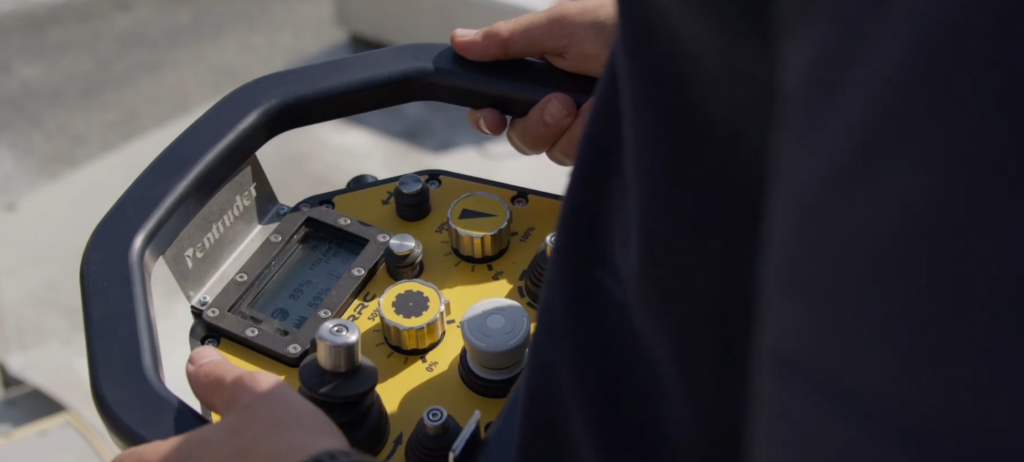
A wall saw is a heavy-duty system mounted to a track, which is fixed directly to a concrete surface. It can be installed vertically or horizontally and is operated remotely, meaning the operator isn’t physically handling the saw during cutting. It is designed for large-scale structural work. These saws use powerful motors and diamond blades to cut through thick reinforced concrete, providing a clean, high-quality finish.
A rail saw is a handheld saw mounted on a guide rail, with the operator controlling it. Using a rail ensures a straight, consistent cut on every project. This type of saw is more portable and easier to set up than a wall saw, making it ideal for mid-sized jobs where precision matters but where a full wall-saw setup isn’t necessary.
How Each Tool Works
With a wall saw, a track is securely fixed to the concrete surface and the saw head travels along that track automatically, controlled remotely by the operator. This allows for precise, deep cuts with minimal physical effort.
On the other hand, a rail saw works by placing a guide rail along the cut line and attaching the saw to it. The operator guides the saw, while the rail prevents deviation, helping to remove the guesswork of freehand cutting and ensuring a straight finish.
The Benefits Of Using A Wall Saw Or A Rail Saw
Safety is one of the most important advantages of both options. One of the biggest wall saw benefits is remote operation, which eliminates the need for someone to manually cut the material. Rail saws also improve safety by stabilising the saw and reducing the risk of kickback.
Precision is another major benefit and because both tools run along a fixed track, they produce straight, clean cuts every time. This is critical for structural openings where accuracy matters. Fatigue is significantly reduced as well, with rail saws allowing the system to guide the cut, while wall saws remove the need for physical handling altogether. Less fatigue means more consistent results and improved safety across the entire job.
Cut depth is a major factor in deciding when to use a wall saw and this type of tool can typically cut beyond 300mm, making it essential for thick reinforced concrete. Rail saws offer greater depth than handheld tools but are still better suited to medium-scale work.
Overall, both tools help to increase productivity. Wall saws cut faster thanks to their powerful motors, while rail saws maintain steady output without tiring the operator. Over time, this leads to faster, safer job completion, lower labour costs and a higher-quality finish.
Wall Saw vs Rail Saw vs Handheld – A Quick Comparison
All three options provide a range of benefits and can be beneficial depending on the project at hand. Here is a quick at-a-glance overview to help you:
Feature | Wall Saw | Rail Saw | Handheld Saw |
Precision | Very High | High | Medium |
Cut Depth | Very Deep (300mm+) | Medium–Deep | Limited |
Safety | Highest (remote control) | High (guided cutting) | Lower |
Fatigue | Lowest | Low | High |
Productivity | Highest | High | Medium |
Setup Time | Longer | Moderate | Quickest |
Best For | Structural/commercial | Mid-scale precision | Small jobs |
Finish Quality | Cleanest | Clean | Rougher |
When Should You Use Each Tool?
Knowing when to use a wall saw usually comes down to scale, depth and safety. Wall saws are ideal for structural modifications, large openings and any job involving thick reinforced concrete and they’re also the best choice when operator safety needs to be maximised.
Rail saws are better suited to mid-scale jobs where precision is important but setup time and portability matter, offering a strong balance between control and convenience. For those small or quick residential jobs, handheld tools may still be the most practical option.
Is The Investment Worth It?
Is it worth investing in a wall saw? That can only be answered by you and it depends on the projects you’re working on. However, a wall saw is best suited to those tradies working on large or structural projects. If your work involves deep cuts and high safety requirements, the investment can deliver strong returns.
A rail saw is often the next step up from handheld cutting and can help you to improve accuracy while also reducing fatigue and increasing productivity without having to face the complexity of a full wall saw system.
If your work is still small-scale or you are a DIY enthusiast, then these tools may not be necessary yet. However, if you plan to take things to the next level, then they become increasingly more valuable as your projects grow.
Final Thoughts
Wall saws and rail saws are powerful tools that take concrete cutting beyond basic handheld methods. While they serve different purposes, both offer major advantages in precision, safety and efficiency and can help you transform your next project.
If you are looking for the right tools to elevate your next project, Taman Diamond Tool Solutions is here to help you. Browse our full range today or get in touch with our team, who will be happy to help.