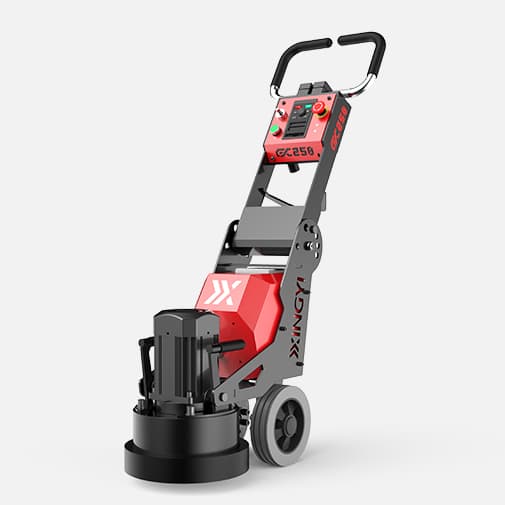
Whether you’re a professional contractor or a DIY renovator, learning how to use a concrete floor grinder is an essential skill when working with concrete surfaces. A floor grinder is a powerful piece of machinery designed to smooth, polish or prepare concrete by removing imperfections, coatings or adhesives.
Here at Taman Diamond Tool Solutions, we offer a range of floor grinders suitable for any project and in this latest blog, we thought we would take a closer look at these essential tools and how to use them.
Types Of Concrete Floor Grinders
Before we explore how to use a concrete floor grinder, it is important to first understand the various types available.
The first are direct drive grinders, which are compact, powerful tools that are perfect for aggressive grinding tasks. This style of floor grinder is most commonly used for floor preparation and removing tough coatings.
The other style is planetary grinders, which are ideal if you are looking for a smooth and polished finish. Their multi-head design makes them suitable for large areas and high-grade polishing and honing jobs.
Key Features And Attachments
Concrete floor grinders have a number of key features, including:
Grinding Shoes and Discs
Different grinding tooling suit different jobs. Metal bond diamond tools are used for heavy grinding, ceramic bond pucks for intermediate steps and resin polishing pucks for finishing. Here at Taman, we offer a range of premium tools to ensure you are ready for any project..
Dust Collection Systems
These are essential for health and safety and connect directly to the grinder to ensure a cleaner and safer worksite. These machines collect and bag the concrete dust that is produced during the grinding process.
Adjustable Settings
Features such as handle height, speed control and adjustable weight provide greater comfort and efficiency when operating.
Preparing For Grinding
When it comes to knowing how to use a concrete floor grinder, preparation is key. You should first assess the condition of the floor, identifying cracks, coatings or any uneven surfaces. Next, you should clean the surface to remove dust, dirt and loose debris. Once you have done that, you will now need to ensure that you choose the most appropriate machine and tooling for your project.
Step-by-step Guide On How To Use A Concrete Floor Grinder
If you are wondering about how to use a concrete floor grinder, we have put together our step-by-step guide to help you:
Step 1: Setup
Assemble the grinder, attach the correct tooling and connect the dust collector. Make sure you select tooling based on floor type and the task at hand (e.g., coarse grit for coating removal, fine grit for honing etc..).
Step 2: Operation
Start the machine and maintain steady control when working on the floor. Be sure to use overlapping passes to ensure even coverage and avoid leaving the grinder in one spot to prevent gouging.
Step 3: Finishing
When you have completed this, switch to a finer grit pad for finishing (if required). Again, keep the grinder moving and maintain steady control of the machine for a smooth result. Once finished, clean the machine, ensure it is dry and store it as per the manufacturer’s instructions.
Top Tips For Effective Use
If you are new to using a concrete floor grinder or you are just looking for some tips to help you improve your results, there are some essential things you should keep in mind:
- Be sure to maintain consistent speed to avoid uneven grinding across the floor.
- Keep moving, staying in the same spot will dig a hole into the concrete that may be difficult to remove.
- Make sure you are using the correct tooling for the job
- Coating Removal – PCD
- Heavy Grinding – 6 / 16 Grit
- General Purpose Grinding – 30 Grit
- Scratch Removal 60 / 120 Grit
- Make sure that you are using the correct bond tooling. In addition to the grit of the diamond you will need to make sure that the bond (the metal alloy that holds the diamond in place) is correct. In general the harder the surface, the softer the bond should be. However if the bond is too soft for the floor the tool will wear prematurely. Refer to the below for a rough guide.
- Super Soft Bond – Very Hard / Heavily Burnished Floor
- Soft Bond – Hard / High MPA Concrete
- Medium Bond – Fully Cured Concrete / General Purpose
- Hard Bond – Green Concrete / Limestone
- Extra Hard Bond – Very Soft Concrete / Exposed Aggregate
- Speed is critical, for heavy material removal set the speed to 800-1200 RPM (depending on tooling performance and concrete) for finishing tasks 1200 – 1500 RPM
- Overlap passes by at least 10% of the grinder width, this will ensure that nothing is missed.
- Grind away from your vacuum and power supply, this will help keep cords and hoses out of the way.
Safety Guidelines
Safety is crucial when learning how to use a concrete floor grinder, so always wear PPE, including safety goggles, gloves, a dust mask and hearing protection. You should also keep electrical cords clear of the grinding path and ensure proper ventilation or use dust collection systems for a dust-free environment.
Maintenance And Troubleshooting
To keep your machine in the best possible condition, it is vital that you take good care of it. After each use, thoroughly clean it to remove any dust and debris from the machine. Use this time to thoroughly inspect it as well and swap out any worn pads or discs to maintain its performance.
If your grinder is leaving uneven marks on the floor, then check pad wear. Equally, if you find that your grinder is overheating then it could indicate that excessive pressure or incorrect speed settings are being used, so review these carefully.
If you find that your grinder is tripping out, check your power leads. A common problem is that low quality long power leads will struggle to supply your machine with adequate power, especially when under heavy load. For single phase machines we recommend a minimum 1.5mm Copper Core thickness and no longer than 20m. If you continue to run you machine on poor quality leads it will dramatically increase the chance of damage to the electrical components
Need Help With Your Next Project?
Here at Taman Diamond Tool Solutions, we offer a wide range of concrete floor grinders to suit your needs. Whether it is the compact C250 concrete floor grinder and edger or the M450 Planetary Grinder, we have solutions that will help you achieve professional results with ease.
Alongside these machines, Taman also supplies a complete range of grinding tools, polishing tools and dust collection systems, ensuring you have everything required for efficient and safe operation.
Want to find out more? Browse our range today or get in touch with our team, who will be happy to help!